Postpartum Home Remedies for Mama and Baby
Mothers are the heart of their baby’s health, the foundation of their family, and the roots of their community. During the tender postpartum window, it is vital to care for the mother with intention and reverence. A new mother needs layers of human support, nourishment, and rest. Alongside this care, we can also reach for gentle plant allies, many of which already live in our kitchen cabinets.
In Ayurveda, the postpartum period is governed by Vata dosha, composed of the elements of space and air. The physical space created in the uterus through birth, along with the profound rite of passage from maiden to mother, is understood elementally as an increase in air. One result of this transition is a weakening of agni, the digestive fire. For this reason, postpartum care first focuses on calming Vata through warmth, grounding, and digestive support.
Additionally, during pregnancy, the body naturally increases how much calcium it absorbs from food to help meet the baby’s needs, especially as the baby’s bones are rapidly developing in the final months. Some bone loss can occur toward the end of pregnancy, and even more during breastfeeding, as calcium is used to produce breast milk. We will explore the use of almonds and cumin for support of bone health
Many of Ayurveda’s most supportive herbal allies for this time are familiar kitchen spices. In this article, I explore simple home remedies to support mothers in the postpartum period using fenugreek, fennel, and cumin. These herbs offer key karmas (actions), including garbhashaya vishuddhikrut (cleansing and detoxifying the uterus), vatashamaka (pacifying Vata), shulaprashamana (relieving colic), stanyajanana (galactagogue: supporting the flow of breast milk), dipana and pachana (kindling and supporting digestion), and vatanulomana (carminative action).
In Ayurveda, breast milk is considered a superior byproduct of Rasa dhatu, the lymph and plasma tissue. It is described as the “juice of life,” sustaining the baby through the body’s highly intelligent design. Breast milk continuously adapts to the baby through information exchanged via the baby’s saliva during nursing. To support both mother and baby, we must prioritize digestion and hydration. By nourishing Rasa dhatu, we can encourage healthy milk flow and support the baby’s digestion through the mother’s milk—helping to ease colic and digestive discomfort during early life.
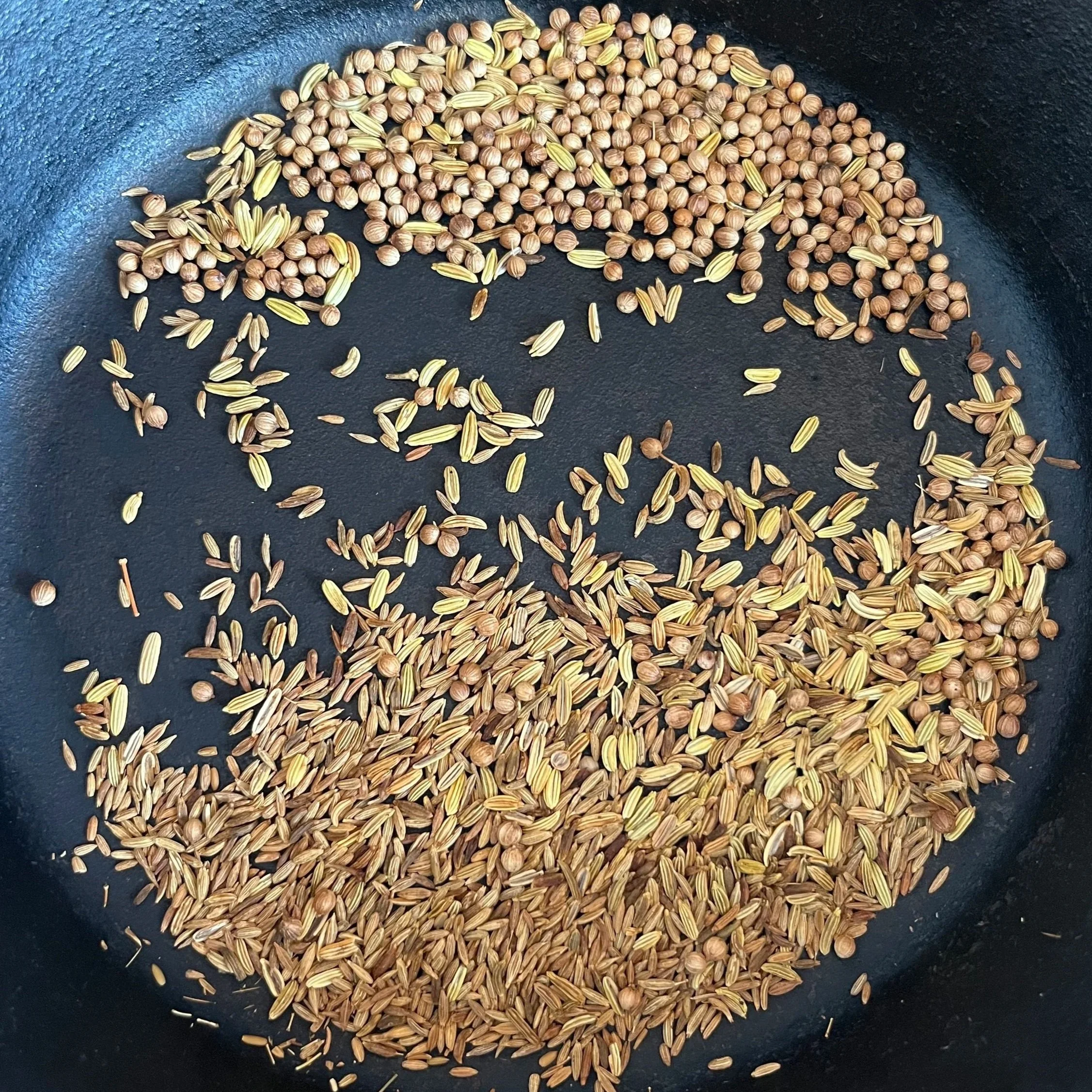
Profile of plant allies
-
Trigonella foenum-graceum L.; Fabaceae
Hindi: Methi
Parts Used: Seeds, leaves
Rasa (taste): Katu (Pungent)
Virya (Effect): Ushna (Heating)
Vipaka (Postdigestive effect): Katu (Pungent)
Guna (Qualities): Laghu (Light), snigdha (oily)V↓ P↑ K↓
Dhatus: Rasa, Artava
Srotansi: Anna, rasa, artava, sthanya, purishaFenugreek is not recommended for pregnant women in larger quantities (small amounts OK)
Selected Karmas:
Calms, vata, sulaprashaman (anticolic),
Nadibalya (nervine)
Dipan (kindles agni)
Pachan (burns ama)
Anulomana (reverses vata)
Sulaprashamana (anti-colic)
Sthanayajanana (galactogogue)
Garbhashayvishodhana (cleanses uterus)
Used for: Lactation and postpartum, colic.
-
Mishreya: Foeniculum vulgare Mill.; Apiaceae
Hindi: Saunf
English: FennelParts Used: Fruit, leaves, root
Rasa: Madhura (sweet), katu (pungent), titkta (bitter)
Virya: Sita (cool)
Vipak: Madhura (Sweet)
Guna: Snighdha (oily), laghu (light), tikshna (sharp)V↓ P↓ K (kaphanisaraka)
Dhatus: Rasa, mamsa, majja, shukra
Srotansi: Anna, rasa, mamsa, majja, shukra, sthanya, mutra, purishaSelected Karmas:
Shulaprashaman (relieves colic)
Hridaya (good for the heart)
Raktaprashamana (soothes rakta)
Kaphanisāraka (makes kapha flow out)
Mutrala (Urinary system)
Yonishulahara (relieves pain in yoni)
Sthanyjanana (galactagogue)
Vatanuloman (carminative)
-
Cuminum cyminum L.; Apiaceae
Sanskrit: Shukla Jīraka
English: CuminParts Used: Seeds
Rasa: Katu (pungent)
Virya: Ushna (heating)
Vipak: Katu (pungent)
Guna: Laghu (light), ruksha (dry)V↓ P↑ K↓
Dhatus: Rasa, rakta, asthi, majja
Srotansi: Anna, Rasa, rakta, asthi, majja, sthanya, mutra, purisha
Selected Karmas:
Sthanyajanana (supports lactation)
Lekhana (scraping)
Shotahara (removes oedema)
Vedanasthapana (analgaesic)
Dipana (kindles agni)
Pachana (Burns ama)
Grahi (binds stools)
Vatanuloman (carminative)
Shulaprashamana (anti-colic)
Garbhashay vishuddhikrut (cleanses and detoxifies uterus e.g. postpartum)
-
Prunus dulcis (Mill.) D.A.Webb; Rosaceae
Sanskrit: Vātāda
Hindi: BadāmPart Used: Seed kernel
Rasa: Madhura (sweet)
Virya: Ushna (heating)
Vipak: Madhura (sweet)
Guna: Guru (heavy), snigdha (oily)V↓ P↓ K↑
Dhatus: Majjā, shukra, ojas
Srotansi: Majjā, shukra, ojas, mutra
Selected Karmas:
Medhya (Good for the mind)
Nadibalya (nervine)
Balya (strengthening)
Brimhana (building)
Vātaghna (gets rid of vata)
Home Remedies
Nourishment Postpartum:
Postpartum mothers need nutrient-dense foods once agni is strong enough to digest them. This is especially important because significant amounts of calcium are transferred from mother to baby during pregnancy and breastfeeding. While the body adapts by increasing calcium absorption, conserving calcium through the kidneys, and drawing from maternal bone stores, women typically experience a temporary 3–7% loss in bone density during lactation. This loss is usually restored after weaning, but adequate nourishment is essential to support maternal bone health during this time. (1)
Cumin is a particularly supportive postpartum spice, rich in both iron and calcium—beneficial for anemia, bone health, and recovery. It also contains phytoestrogens, which have been associated with anti-osteoporotic effects. Traditionally, cumin is used to support lactation, as its thymol content helps stimulate glandular secretions, including breast milk. It is especially nourishing for lactating mothers, menstruating women, and during pregnancy, and is often taken with honey to enhance its benefits.
Almonds support building the tissues, calming the nervous system and replenishing ojas, subtle essence of nourishment in the body. Below are recipes to support nourishment during the postpartum time.
Cumin Coriander Fennel (CCF) tea: Mix one-third tsp each of cumin, coriander and fennel ‘seeds’ in a cup of water, boil until the seeds sink and strain. Drink after meals to aid digestion or to relieve colic. This tea is also a great way to help get adequate iron and calcium in your diet.
Non-dairy Ojas Drink - use in pregnancy and postpartum for nourishing and bone health
Ingredients
10 raw almonds
2 cups pure water
20 raisins
1 Tablespoon organic rose petals (optional - rejuvenative)
1 tsp ghee (rejuvenative)
1/32 tsp saffron (increases digestion & rejuvenative)
1/8 tsp ground cardamom (increases digestion)
pinch of black pepper (helps control the Kapha)
Directions
Soak almonds in 1 cup of water overnight, and soak raisins in 1 cup of water either overnight or for several hours
In the morning, drain off the almond water and rub the skins off the almonds
In a blender, add the raisins AND their soaking water with the drained and peeled almonds
Add rose petals, ghee, saffron, cardamom, black pepper
Blend until smooth
Drink 3-4 times a week as directed. Best done after Pancha Karma as part of rejuvenation.
Watch if any signs of excess mucus/kapha, consult if so.
Soaked and peeled almonds snack. Soak almonds overnight. Peel the skins off and discharge. Enjoy about 10 almonds a day as a snack. Removing the peel reducing the heating effects.
Methi Halwa for Postpartum
Ingredients
1 cup brown rice
1 cup fenugreek seeds
1 cup jaggery
1-2 tsp ghee
2 tsp grated coconut (optional)
Method
Soak methi seeds in water for 2-3 hours.
Roast brown rice on medium flame. Roast till it pops (like popcorn).
Grind roasted brown rice finely in spice grinder, coffee grinder or Vitamix.
Grind soaked methi seeds in spice grinder.
Mix powdered brown rice and ground methi seeds. To this mixture add grated jaggery. You can add grated coconut if you wish to. Also to make it tastier you can add ghee.
Lactation:
Soak one tablespoon of fenugreek seeds in one cup of water overnight. In the morning, boil this water along with the fenugreek seeds for several minutes. Strain the solution, and drink this tea every morning until you get positive results.
Fennel Tea: Drink an infusion prepared by boiling 2 teaspoons of fennel in a cup of barley water for 2 to 3 times a day.
Digestive Support for Mom and Anti-colic for Baby:
For Newborns: Add 1 tsp fennel seeds to 8 ounces of boiling water. Cover and steep for 30 minutes. Strain. The steeping time can be reduced to 10 to 15 minutes by crushing the seeds first. A breastfeeding mother can drink this tea and pass along the benefits through her milk (an added benefit is that fennel also promotes lactation).
Gripe water for colicky babies 3 months to 1 year old: Dry roast a Tbsp. of fennel seeds in an empty pan for few seconds. Add a cup of water to it and boil until it reduces in volume and the colour changes. Give 1 tsp at a time babies 3-6 months, 2 tsp for babies 6 months to 1 year.
Cumin Coriander Fennel (CCF) tea: Mix one-third tsp each of cumin, coriander and fennel ‘seeds’ in a cup of water, boil until the seeds sink and strain. Drink after meals to aid digestion or to relieve colic. This tea is also a great way to help get adequate iron and calcium in your diet. You can also use this tea to bring down a fever.
(1) Bone mineral changes during pregnancy and lactation, Kalkwarf HJ, Specker BL.
Endocrine. 2002 Feb;17(1):49-53. doi: 10.1385/ENDO:17:1:49.
(2) Recipes collected by Alakananda Ma, Alandi Ayurveda Gurukula